
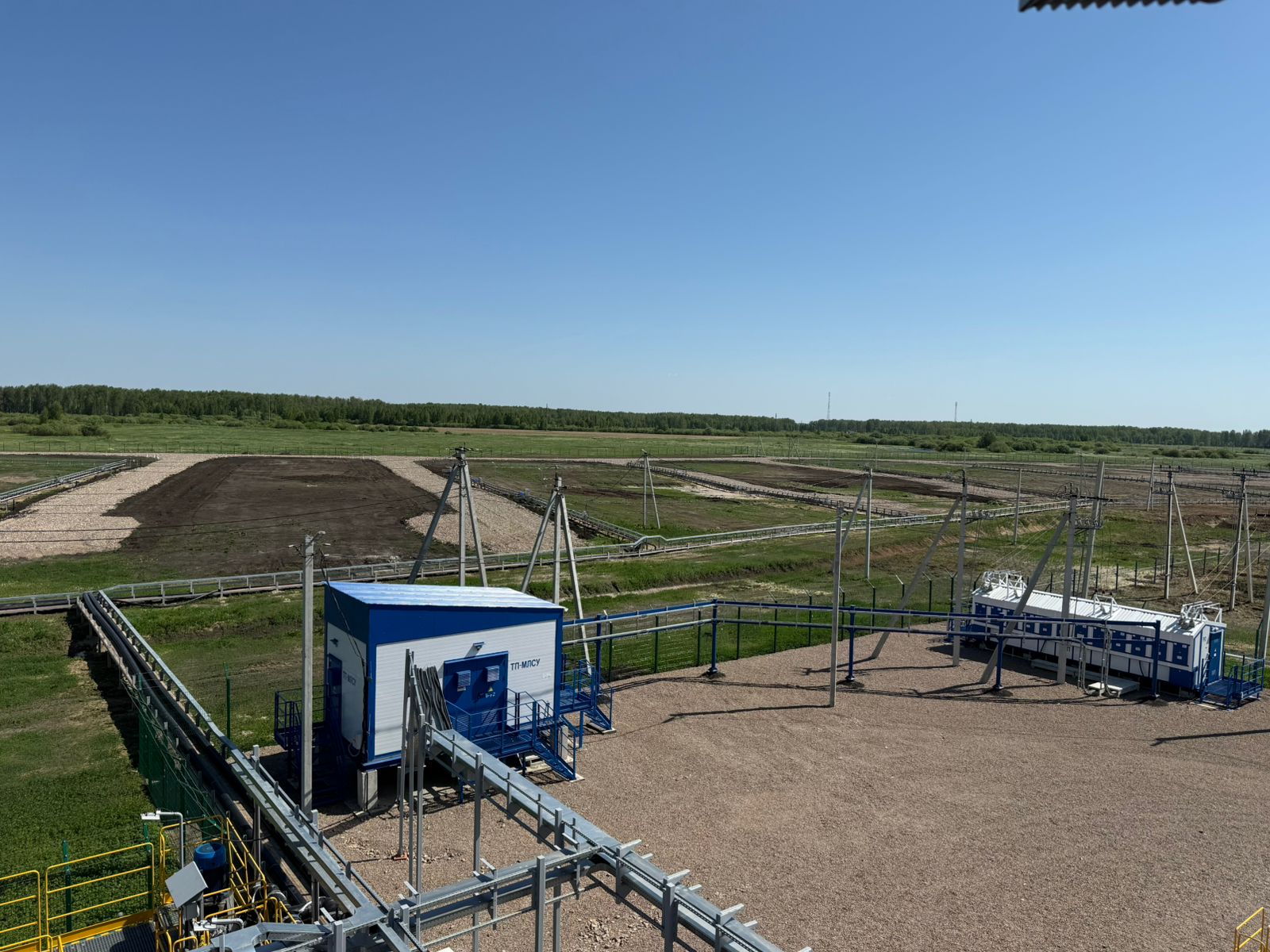
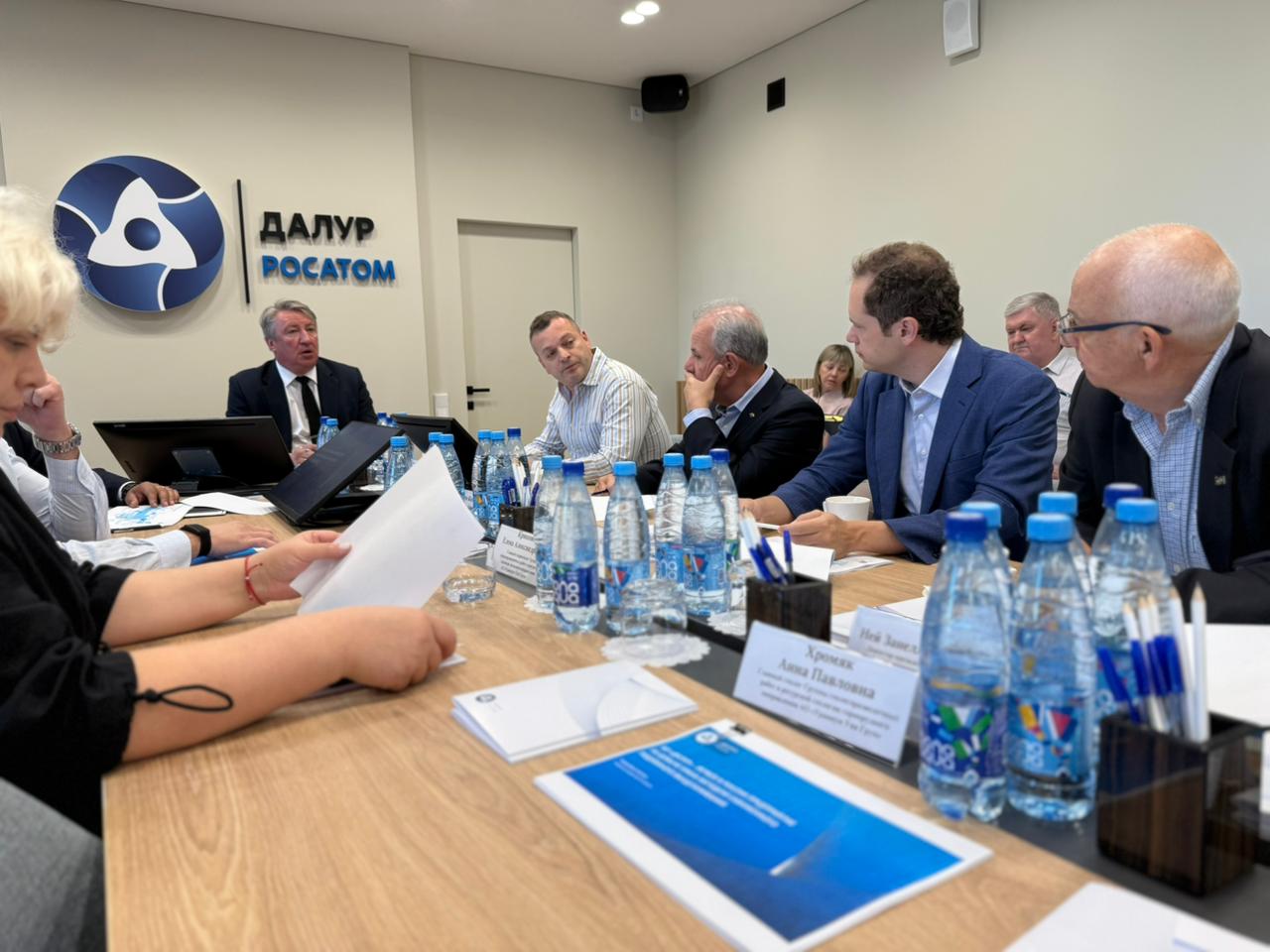
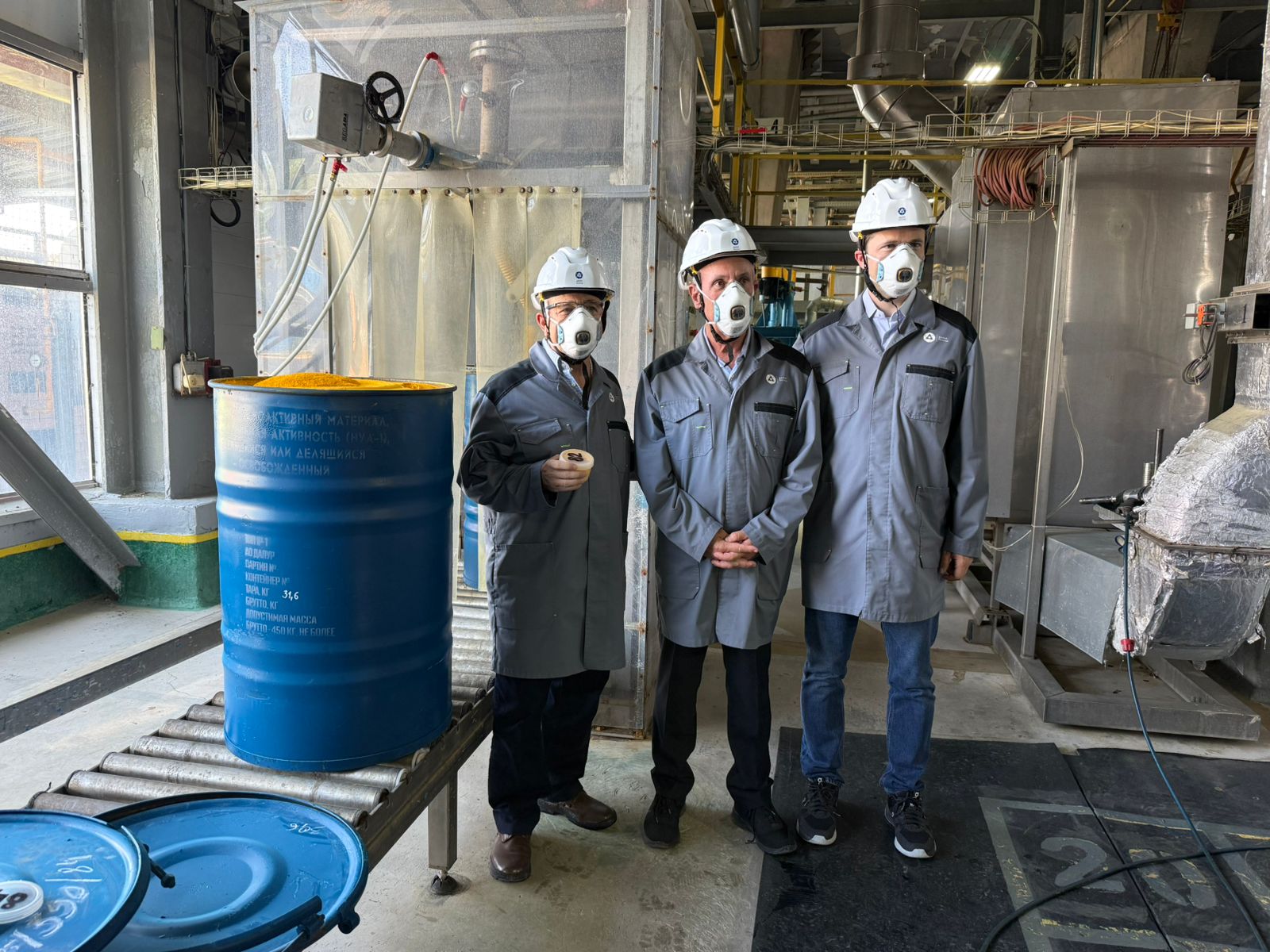
On May 26, NBEPar officials visited the yellowcake production unit of the Russian company JSC Dalur, controlled by the state–owned nuclear group Rosatom and one of the pillars of the expansion of uranium mining in Russia in recent decades. Dalur was the first company in the country to use in situ leaching technology (ISL/ISR) on a commercial scale, a method considered cheaper and less aggressive to the environment than conventional mining. NBEPar and Grupo Diamante intend to bring the process to Brazil, through its affiliate Nadina Minerals, a joint venture created with Rosatom to explore the mining of critical and strategic metals, such as uranium. Brazil has the seventh largest known uranium reserves in the world. More than half of the uranium mined on the planet uses ISL technology, especially in countries such as Kazakhstan, Russia and the United States.
Yellowcake is a uranium concentrate, usually composed mainly of uranium oxide (U₃O₈), obtained after chemical processing of the ore. It represents an intermediate stage of the nuclear cycle: after being produced, the material goes on to uranium hexafluoride (UF6), enrichment and subsequent manufacture of nuclear fuel.
At Dalur, the process works without major excavations. Instead of removing tons of rock from the surface, the company injects chemical solutions — mainly sulfuric acid — directly into underground aquifers that contain uranium. This solution dissolves the mineral, which is then pumped back to the surface. The uranium is then chemically separated and turned into yellowcake. Few operators control the process in a control room, miles away.
The most important characteristic of underground leaching is that it is a practically closed mining process, which drastically reduces the generation of solid waste and avoids major interventions in the landscape.
Unlike conventional mining, there is no need to dig pits, remove huge volumes of rock, or build extensive tailings dams and waste rock deposits. In addition, the area occupied by the facilities is much smaller and, at the end of the operation, the land can be recovered more easily, minimizing changes in the earth‘s surface. The method also consumes less energy and reduces risks associated with storing solid radioactive waste. All of this reduces the impacts on the environment.
Dalur operates in the Dalmatovsky district of the Kurgan region of the Urals, about 1,350 kilometers east of Moscow. The mine is mainly in the Dalmatovskoye, Khokhlovskoye and Dobrovolnoye deposits, which are considered part of the Trans–Ural Uranium Province. The reserves exploited by Dalur amount to tens of thousands of tons of recoverable uranium.
The CEO of NBEPar, Ney Zanella dos Santos, the chairman of the Board of Directors, Bento Albuquerque, and the counselor Pedro Kassab, also vice president of Diamante Holding, attended a presentation of the ISL technology.